
Nick Sanders

Product Management | AI Agents & Multi-Agent Systems | Agent Platforms & Frameworks | Developer Tools | Cloud Platform & Services
Product manager and builder with years in product management and developer tools. DC roots, grad school @ the University of Texas at Austin, now building from the San Francisco Bay Area. Currently focused on AI agents — designing and shipping agent platforms, agent frameworks, and multi-agent systems, plus the cloud platform services behind them.
Previously

Broadcom
Technical Product Manager – VMware Cloud
Nov 2023 – Aug 2024
- Continued leading the VMware Cloud subscription roadmap after Broadcom acquisition of VMware
- Aligned new executive stakeholders while maintaining self-service UI and API experiences
- Guided integration efforts with Broadcom IT plaform
VMware
Product Manager – VMware Cloud
Apr 2021 – Nov 2023
- Owned end-to-end product lifecylce & roadmap for VMware Cloud subscription services across UI and API channels
- Launched a $300M ARR SaaS expansion on AWS with engineering, UX, finance, and GTM partners
- Implemented an automated subscription model for on-prem customers, opening a new sales channel

Amazon Web Services
Sr. Product Mangager Intern - Technical
Jun 2019 – Aug 2019
- Prototyped a cost management and allocation tool for container services with engineering partners
- Analyzed the container cost market to surface competitive gaps for the AWS roadmap
- Ran customer feedback sessions on prototypes to align workflows with enterprise needs
Fannie Mae
Technology Engineer & Analyst
Aug 2012 – Apr 2018
- Led developer tooling for 220+ applications to improve productivity, quality and compliance
- Deployed a component management system integrating security, legal, and architecture controls
- Built evaluation frameworks that assessed 100+ software products for enterprise adoption

UT Austin McCombs School of Business
MBA, Technology & Innovation
Class of 2020
- Consortium for Graduate Study in Management fellow, Graduate Business Technology Group, Black Graduate Business Association
- Board Fellow with Texas Folklife, advising on digital strategy
Connect
Portfolio
Featured Projects
A collection of recent projects I have been building
-

Amprealize
Private PreviewBehavioral AI for software teams—plan and track real work, assign AI agents as teammates on the same backlog, and capture patterns worth keeping into versioned behaviors so every sprint starts smarter.
-

IzzoCam
Available on App StoreLive pet camera with AI-generated commentary that turns video into entertaining narrative recaps.
-

Patio2
Available on App StoreReal-time multiplayer trivia and debate game that transforms your phone into the ultimate party game controller.
-
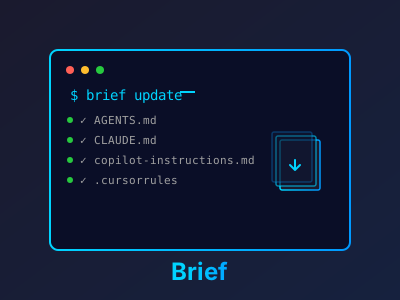
Brief
Available on GitHub · Open SourceCLI tool & MCP server that syncs AI assistant instructions across GitHub Copilot, Claude, Cursor, and custom agents.
-

FlexEx
Available on App StoreAI fitness app that generates personalized workouts on demand with real-time editing.
-

Rillia
Beta Testing via TestFlightAll-in-one group coordination app for trip planning—chat, proposals, payments, and live locations.
-

Coffee Scroll - Morning News Podcast
Private - In use in portfolioAutomated podcast generator that converts curated news into daily audio episodes with AI-powered summarization and natural voice narration. Aggregates multiple news sources and produces professional-quality episodes on autopilot.
-
Windy
In DevelopmentWeb-first SaaS learning platform for teens and adults with AI-assisted tutoring, project-based courses, and meaningful gamification.
-

Ring
Private Use · Run Bi-HourlyAutomated job discovery system that monitors PM openings across multiple ATS platforms.
Exploring Next
Full archive → Filters
Source
Format
Episodes on the research, tools, companies, and ideas shaping what comes next.
Script
Voice
-
EP 1113
You Gave Your AI Agent Access, But Who Is Giving It Orders?
AI agent security risks stem from authority confusion—untrusted content issuing commands to software that already has user permissions—rather than model alignment failures.
Search:
 Tavily Script:
 GPT-5.4 Voice:
 Speechify Simba 3.2
-
EP 1112
I changed one llama.cpp flag, and my 8GB laptop GPU now runs a 35B model faster than I can read
8GB of VRAM isn't the bottleneck, your settings probably are
Search:
Tavily Script: GPT-5.4 Voice:  Inworld TTS 2
-
EP 1111
Build more responsive apps with the Decisions API
Fast, focused, low-cost decisions for any application.
Search:
 SerpAPI Script: GPT-5.6 Terra Voice: OpenAI TTS
-
EP 1110
Vercel Open-Sources durable-harness for Crash-Proof Coding Agents
Vercel released durable-harness, an open-source package that logs every model and tool call so Pi, OpenCode, Claude Code and Codex sessions resume after crashes, timeouts and redeploys on Vercel, Postgres or a laptop.
Search:
 You.com Script: GPT-5.4 mini Voice:
 Cartesia TTS
-
EP 1109
Introducing Claude Duet
Claude Duet is a new app where Claude works as a proactive agent. The research preview opens by waitlist today for Pro and Max subscribers in the US.
No Search Script:
GPT-5.4 mini Voice:  Hume Octave 2
-
EP 1108
What FDE means at OpenAI
What forward deployed engineering means at OpenAI
Search:
 Firecrawl Script:
 Haiku 4.5 Voice: ElevenLabs v4
-
EP 1107
Introducing Flint - Recursive
Recursive self-improving superintelligence to automate knowledge discovery.
Search:
 Exa Script: GPT-5.6 Luna Voice:
 Rime Coda
-
EP 1106
Learning from Research: Toward Lifelong Agent Harness Evolution
Language agents are expected to solve increasingly complex tasks, creating a growing need for continual improvement. One promising approach is to evolve the agent harness, the software that governs tool use, memory management, and task execution, while keeping the underlying language model fixed. Recent methods automate this process by using a meta coding agent to modify the harness based on execution feedback. However, relying on that agent's existing knowledge and observed failures can
Search:
Tavily Script: GPT-5.1 Voice: Inworld TTS 2 -
EP 1105
Broad access through consistent standards
How OpenAI works with distribution partners to uphold consistent safeguards, support responsible access, and clarify expectations in our Usage Policies.
Search:
 Bright Data Script: GPT-5.1 Voice: Cartesia TTS
-
EP 1104
CTGT releases open source tool Concordance to trace why AI agents make inconsistent decisions
CTGT replaced the identifiers with stable labels, sorted the list and isolated each test in a fresh organizational environment. Five subsequent runs each produced the same 34 obligations.
Search:
SerpAPI Script: GPT-5.5 Voice: Cartesia TTS -
EP 1103
Deterministic Inference Did Not Make Our Pipeline Deterministic
We ran one synthetic banking manual through our pipeline four times and got four different sets of obligations, from a model that returned identical text for identical requests.
Search:
You.com Script: Sonnet 4.6 Voice: Hume Octave 2 -
EP 1102
From feral to fiduciary: making AI agents serve your interests
Vijil argues AI agents should earn autonomy like credit: tested up front, capped by policy, and monitored constantly. Without that, they go feral.
Search:
 Jina Script: GPT-5.6 Luna Voice: ElevenLabs v4
-
EP 1101 Model Behavior
Model Behavior: Week of October 19, 2026
NVIDIA's Nemotron 3.5 Super VL, Beam's open-weight deployment story, and whether Subquadratic Snap's long-context claims actually reduce agent brittleness—the week's real motion was adoption, not benchmark crowns.
Search:
Tavily Script: GPT-5.5 Voice: Speechify Simba 3.2 -
EP 1100
From Microservices to Agents: the Next Evolution of Distributed Systems
The article examines the transition from microservices to agentic AI architecture in distributed systems. Microservices allow for functional decomposition, while agentic systems focus on decision decomposition. This shift introduces new complexities in observability, reliability, and system design, highlighting the need for updated architectural patterns and practices.
Search:
Exa Script: GPT-4.1 Voice: Rime Mist v3 -
EP 1099
llm-d 1.0 Advances Open, Cost-Efficient AI Inference for Production Scale
Founded in 2025 by Red Hat, IBM (NYSE: IBM), Google Cloud, CoreWeave and NVIDIA, and now governed by the Cloud Native Computing Foundation (CNCF), llm-d plays a key role in the open foundation for enterprises deploying AI at scale in production.
Search:
Tavily Script: GPT-5.4 mini Voice:  Fish Audio S2.1 Pro
-
EP 1098
Scaling AI agents requires inventory, contracts and maintained context
As AI agent fleets grow, enterprises need inventory, enforceable contracts and maintained business context to control risk, cost and reliability.
Search:
Tavily Script:  Nemotron 3 Ultra 550B A55B Voice: Inworld TTS 1.5 Mini
-
EP 1097
Timestral: Mistral's time-series foundation models | Mistral
State-of-the-art probabilistic forecasting in four sizes (5M–209M params), CPU-efficient, zero-shot ready.
Search:
SerpAPI Script: GPT-5.1 Voice: Inworld TTS 2 -
EP 1096
Diffusion at Scale: Introducing Mercury 3 – Inception
Mercury 3 is the most capable diffusion LLM released to date. It outperforms GPT-6 Luna and Claude Haiku 5.5 while running 4–8x faster at 1,000+ tokens per second.
Search:
You.com Script: GPT-5.5 Voice: Hume Octave 2 -
EP 1095
Decision models like Jev handle what SQL rules cannot. Here's how data teams use them
Decision models like Jev return typed labels with confidence scores instead of text, positioning them as a cost-effective middle layer between SQL rules and full LLM calls for high-volume classification tasks in data pipelines.
Search:
Jina Script: Sonnet 4.6 Voice: Cartesia TTS -
EP 1094
NVIDIA Dory 1.0 4B on a Mac: 3.7GB Fits 16GB, Fork Build Needed
NVIDIA's smallest Dory 1.0 4B build is a 3.673 GB Q5_K_M GGUF, so memory is settled on every current Mac. The blocker is software: no llama.cpp release reads the Dory architecture, so you build a pinned contributor fork.
Search:
Firecrawl Script: GPT-5.4 Voice: Hume Octave 2 -
EP 1093
DeepSeek Just Released V4.1-Flash-1017, Scores 77.0 on DeepSWE, Opens Search API
DeepSeek has just released DeepSeek-V4.1-Flash-1017, a new checkpoint of its V4.1-Flash model. It is live on the DeepSeek website, app and API. DeepSeek claims stronger scores, faster task completion and shorter outputs than the September V4.1-Flash release. The company calls it a Pareto improvement in performance and cost. Alongside it, DeepSeek opened its Search and […]
Search:
Exa Script: GPT-5.4 Voice: ElevenLabs v4 -
EP 1092
Harness^2: Recursive Agent Harnessing for an Open World
LLM agents' capabilities depend not only on their underlying models but also on their execution harnesses. Recursive self-improvement (RSI) offers a promising approach to automatically evolve these harnesses. However, deploying RSI in open-world settings still faces two critical challenges. First, open-world tasks are typically unseen during the harness design phase and novel at test time, leaving no ground-truth verifiers to reliably guide online harness edits. Second, the RSI process remains
Search:
Tavily Script: GPT-5.6 Terra Voice:  Deepgram Aura-2
-
EP 1091
Investing in the public benefit
We’re committing a portion of Anthropic’s shares to the Anthropic Public Benefit Fund, a new entity with a structure that increases the stake as the company grows.
Search:
Tavily Script: GPT-5.4 mini Voice: Rime Coda -
EP 1090
The AI expectations gap
How will AI reshape the economy in the years ahead? What is the core source of disagreement about AI's future impact on the economy? This note presents new survey evidence on these questions.
Search:
SerpAPI Script: GPT-5.4 mini Voice: Speechify Simba 3.2 -
EP 1089
Hark releases an AI personal assistant with a focus on privacy | TechCrunch
The AI lab's personal assistant is an operating system from the future designed to compete with Muse, Dots, and Instinct.
Search:
You.com Script: GPT-5.6 Luna Voice: Inworld TTS 2 -
EP 1088
Gartner says agent costs will rise fivefold by 2028 even as tokens get cheaper. Here is how to keep them in check
Gartner forecasts agentic AI inference costs will rise fivefold by 2028 despite falling token prices, driven by agents consuming 5-30x more tokens per task than chatbots and labs reinvesting efficiency gains into costlier frontier models.
Search:
Jina Script: Haiku 4.5 Voice: OpenAI TTS -
EP 1087
Welcome Beam: a 501B open model you can own, customize, and scale
We’re on a journey to advance and democratize artificial intelligence through open source and open science.
Search:
Firecrawl Script: GPT-4.1 Voice: Cartesia TTS -
EP 1086
Beam is now available — Reflection
Make intelligence open and accessible to all
Search:
Exa Script: GPT-5.4 mini Voice: Hume Octave 2 -
EP 1085
Only 34% trust synthetic data's referential integrity — and it’s holding adoption back
Only 34% of leaders trust synthetic data's referential integrity. Learn how high data quality unlocks adoption in enterprise testing.
Search:
Tavily Script: GPT-5.4 mini Voice: ElevenLabs v4 -
EP 1084
Anthropic update on independent evaluators
Anthropic announces updates to embedding independent evaluators
Search:
Bright Data Script: GPT-5.1 Voice: Inworld TTS 2 - No episodes match these filters.
chemistry
humor
technical
pacing
Powered by  Cloudflare Twilio Claude OpenAI
AI Toolkit
AI Tools, Frameworks & Products
The models, agent frameworks, and voice/multimodal stack I build with — paired with the product, analytics, and delivery tooling to ship it.
-
Foundation Models
- Claude
- OpenAI
- Gemini
- Llama
- Mistral
- DeepSeek
- Qwen
- Kimi (Moonshot)
- GLM
- MiniMax
- NVIDIA NIM
-
AI Agents & Dev Tools
- Claude Code
- Claude Agent SDK
- MCP
- Cursor
- OpenAI Codex
- LangChain
- LangGraph
-
Voice & Multimodal AI
- ElevenLabs
- Cartesia
- Deepgram
- Hume
- Rime
- Fish Audio
- Inworld
- Murf
- LiveKit
-
AI Infrastructure & Observability
- Supabase (pgvector)
- Cloudflare Workers AI
- Replicate
- Vercel AI
- Langfuse
- OpenTelemetry
-
Product, Design & Collaboration
- Figma
- Jira
- Confluence
- Notion
- Linear
- Slack
- Storybook
-
Analytics & Experimentation
- PostHog
- Mixpanel
- Amplitude
- Segment
- Google Analytics
-
Build & Delivery
- TypeScript
- Python
- React
- Node.js
- Astro
- AWS
- Google Cloud
- GitHub











Beyond Work
What I'm into in my free time
The things that keep me energized, curious, and occasionally caffeinated.